qolmat.imputations.imputers_pytorch.ImputerDiffusion
- class qolmat.imputations.imputers_pytorch.ImputerDiffusion(model: str = 'TabDDPM', groups: ~typing.Tuple[str, ...] = (), epochs: int = 100, batch_size: int = 100, x_valid: ~pandas.core.frame.DataFrame = None, print_valid: bool = False, metrics_valid: ~typing.Tuple[~typing.Callable, ...] = (<function mean_absolute_error>, <function dist_wasserstein>), round: int = 10, cols_imputed: ~typing.Tuple[str, ...] = (), index_datetime: str = '', freq_str: str = '1D', random_state: ~typing.Optional[~typing.Union[int, ~numpy.random.mtrand.RandomState]] = None, num_noise_steps: int = 50, beta_start: float = 0.0001, beta_end: float = 0.02, lr: float = 0.001, ratio_masked: float = 0.1, dim_embedding: int = 128, dim_feedforward: int = 64, num_blocks: int = 1, nheads_feature: int = 5, nheads_time: int = 8, num_layers_transformer: int = 1, p_dropout: float = 0.0, num_sampling: int = 1, is_rolling: bool = False)[source]
Imputer based on diffusion models.
This class inherits from the class _Imputer. It is a wrapper for imputers based on diffusion models.
- __init__(model: str = 'TabDDPM', groups: ~typing.Tuple[str, ...] = (), epochs: int = 100, batch_size: int = 100, x_valid: ~pandas.core.frame.DataFrame = None, print_valid: bool = False, metrics_valid: ~typing.Tuple[~typing.Callable, ...] = (<function mean_absolute_error>, <function dist_wasserstein>), round: int = 10, cols_imputed: ~typing.Tuple[str, ...] = (), index_datetime: str = '', freq_str: str = '1D', random_state: ~typing.Optional[~typing.Union[int, ~numpy.random.mtrand.RandomState]] = None, num_noise_steps: int = 50, beta_start: float = 0.0001, beta_end: float = 0.02, lr: float = 0.001, ratio_masked: float = 0.1, dim_embedding: int = 128, dim_feedforward: int = 64, num_blocks: int = 1, nheads_feature: int = 5, nheads_time: int = 8, num_layers_transformer: int = 1, p_dropout: float = 0.0, num_sampling: int = 1, is_rolling: bool = False)[source]
Init ImputerDiffusion.
- Parameters
- groupsTuple[str, …], optional
List of column names to group by, by default ()
- modelstr
Name of the imputer based on diffusion models (e.g., TabDDPM, TsDDPM), by default TabDDPM
- epochsint, optional
Number of epochs, by default 10
- batch_sizeint, optional
Batch size, by default 100
- x_validpd.DataFrame, optional
Dataframe for validation, by default None
- print_validbool, optional
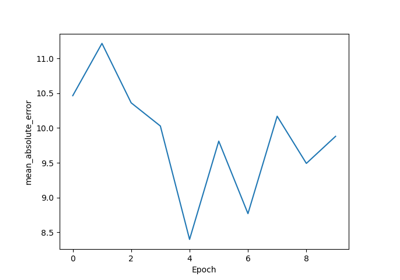
Print model performance for after several epochs, by default False
- metrics_validTuple[Callable, …], optional
Set of validation metrics, by default (metrics.mean_absolute_error, metrics.dist_wasserstein)
- roundint, optional
Number of decimal places to round to, for better displaying model performance, by default 10
- cols_imputedTuple[str, …], optional
Name of columns that need to be imputed, by default ()
- index_datetimestr
Name of datetime-like index. It is for processing time-series data, used in diffusion models e.g., TsDDPM.
- freq_strstr
Frequency string of DateOffset of Pandas. It is for processing time-series data, used in diffusion models e.g., TsDDPM.
- random_stateRandomSetting, optional
Controls the randomness of the fit_transform, by default None
- num_noise_stepsint, optional
Number of noise steps, by default 50
- beta_startfloat, optional
Range of beta (noise scale value), by default 1e-4
- beta_endfloat, optional
Range of beta (noise scale value), by default 0.02
- lrfloat, optional
Learning rate, by default 0.001
- ratio_maskedfloat, optional
Ratio of artificial nan for training and validation, by default 0.1
- dim_embeddingint, optional
Embedding dimension, by default 128
- dim_feedforwardint, optional
Feedforward layer dimension in Transformers, by default 64
- num_blocksint, optional
Number of residual blocks, by default 1
- nheads_featureint, optional
Number of heads to encode feature-based context, by default 5
- nheads_timeint, optional
Number of heads to encode time-based context, by default 8
- num_layers_transformerint, optional
Number of transformer layer, by default 1
- p_dropoutfloat, optional
Dropout probability, by default 0.0
- num_samplingint, optional
Number of samples generated for each cell, by default 1
- is_rollingbool, optional
Use pandas.DataFrame.rolling for preprocessing data, by default False
Examples
>>> import numpy as np
>>> from qolmat.imputations.imputers_pytorch import ImputerDiffusion
>>>
>>> X = np.array(
...     [
...         [1, 1, 1, 1],
...         [np.nan, np.nan, 3, 2],
...         [1, 2, 2, 1],
...         [2, 2, 2, 2],
...     ]
... )
>>> imputer = ImputerDiffusion(epochs=50, batch_size=1, random_state=11)
>>>
>>> df_imputed = imputer.fit_transform(X)
- get_model() TabDDPM[source]
Get the underlying model of the imputer based on its attributes.
- Returns
- ddpms.TabDDPM
TabDDPM model to be used in the fit and transform methods.
- get_params_model() dict[source]
Get parameters for creating a DDPM model.
- Returns
- dict
A dictionary containing the parameters required to create a model of type TabDDPM or TsDDPM.